The best temperature for sleeping — and the darkness that goes with it
The best temperature for sleeping is 60–67°F (15–19°C), and most people settle near 65°F (18°C). That range isn't a comfort preference. A cool room helps your core body temperature fall, and that fall is one of the signals that starts sleep.
Why the best temperature for sleeping is 60–67°F
Core temperature runs on a circadian rhythm: it peaks in the late afternoon or early evening, then declines to a trough a couple of hours before your usual wake time. Sleep onset sits on the steep part of that decline, and the swing is small — roughly 1–2°F, about half a degree Celsius.
Heat leaves through the skin, mostly at the extremities: vessels in your hands and feet dilate, warm blood moves to the surface, heat radiates away. Warm hands and feet alongside a falling core is the signature of someone about to fall asleep. A warm room removes the gradient that heat has to travel down, so you can be exhausted and still lie there — the thermal step hasn't happened. The thermostat is an input to your circadian rhythm, not an amenity.
The best room temperature for sleep is a range, not a number
Treat 60–67°F as a starting point. Four things move your personal target.
Bedding. The air between you and the duvet sits closer to skin temperature than to the thermostat, and that microclimate is what your body reads. A heavy duvet at 61°F and a single sheet at 70°F land in much the same place — change one and you have to change the other.
Humidity. Evaporating sweat is a major cooling channel and it stalls in damp air. Roughly 30–50% relative humidity keeps it working; above that, 65°F feels clammy.
Airflow. Moving air strips heat and speeds evaporation, so a fan buys a few degrees without touching the thermostat.
Age and company. Thermoregulation blunts with age, and older adults often prefer the warm end. Nurseries are usually kept warmer, around 68–72°F, with light layers rather than heavy bedding. Two adults under one duvet make twice the heat, and separate duvets settle more temperature arguments than a thermostat.
The hot shower paradox
A warm bath or shower 60–90 minutes before bed helps most people fall asleep faster, which sounds backwards until you follow the heat. Warming the skin dilates the peripheral vessels; when you get out, those open vessels dump heat fast and your core drops further than it otherwise would. It's a cooling intervention with a warm front end.
Socks work the same way. Cold feet trigger vasoconstriction, which locks heat in the core exactly when you need to shed it. Cold air with a warm bed is the combination that works, not cold everything — one of the plainer ways to fall asleep fast.
Why do I get hot when I sleep?
Three causes usually stack in the small hours.
REM sleep. Your body largely stops defending its temperature during REM — shivering and sweating are suppressed, and you drift toward whatever the room is doing. REM periods lengthen toward morning, so a room that felt fine at midnight bites at 4 a.m., following the structure of sleep cycle stages.
Heat banked in the bed. Dense memory foam conforms closely and moves almost no air, so it stores body heat over hours; latex and coil constructions breathe more. Waterproof protectors are worse than people expect, since a vapor barrier under the sheet blocks evaporation from below.
Everything else. Thermostat schedules often swing the wrong way overnight, and alcohol dilates vessels early then rebounds hours later with sweating and awakenings. Night sweats that soak through nightclothes, or arrive with other symptoms, are worth raising with a clinician rather than solving at the thermostat.
Sleeping in a cold room: the benefits and the floor
The benefits of sleeping in a cold room show up at the transition and in the second half of the night: faster onset, and fewer thermal awakenings — the ones where a leg ends up outside the duvet. Claims tying cold bedrooms to metabolism through brown fat are early and drawn mostly from daytime exposure — don't sleep at 55°F for your metabolism.
There is a floor. Cold that your bedding can't offset fragments sleep just as effectively as heat does; with normal bedding, most people start waking once a room drops into the mid-50s°F (around 12–13°C). If your feet are cold or you're curled up, the room won.
Darkness, ranked by what it costs you
Light is the other input your clock reads directly, and eyelids block less of it than they feel like they do. Evening light suppresses melatonin and pushes your timing later, though sensitivity varies widely. Sleeping with lights on is associated with lighter, more fragmented sleep even when you don't remember waking.
| Fix | Cost | What it solves | The catch |
|---|---|---|---|
| Phone charges outside the bedroom | Free | Evening light, plus the 3 a.m. check | You need a separate alarm |
| Tape or unplug standby LEDs | Free | Point sources near the bed | Routers and chargers hide in corners |
| Sleep mask | Low | Streetlights, a partner's lamp, travel | Slips off; strap pressure |
| Room-darkening curtains | Medium | Most of the ambient glow | Light still leaks at the edges |
| Blackout curtains | Higher | Summer dawns, day sleeping | You lose the morning light cue |
One free step isn't in the table: overheads off after dark, one low lamp instead. For those, mounting matters more than fabric — a panel hung inside the frame leaves a halo on all four sides, so the track has to run wider and higher than the opening, panels wrapping to the wall. And once the room is genuinely dark you've deleted your morning light signal, so get bright light within minutes of waking.
The five-minute room setup
Drop the thermostat an hour before bed rather than at lights-out — rooms have thermal mass and respond slowly. Fan on. Overheads off, one low lamp. Phone charging in another room. Curtains closed with no center gap.
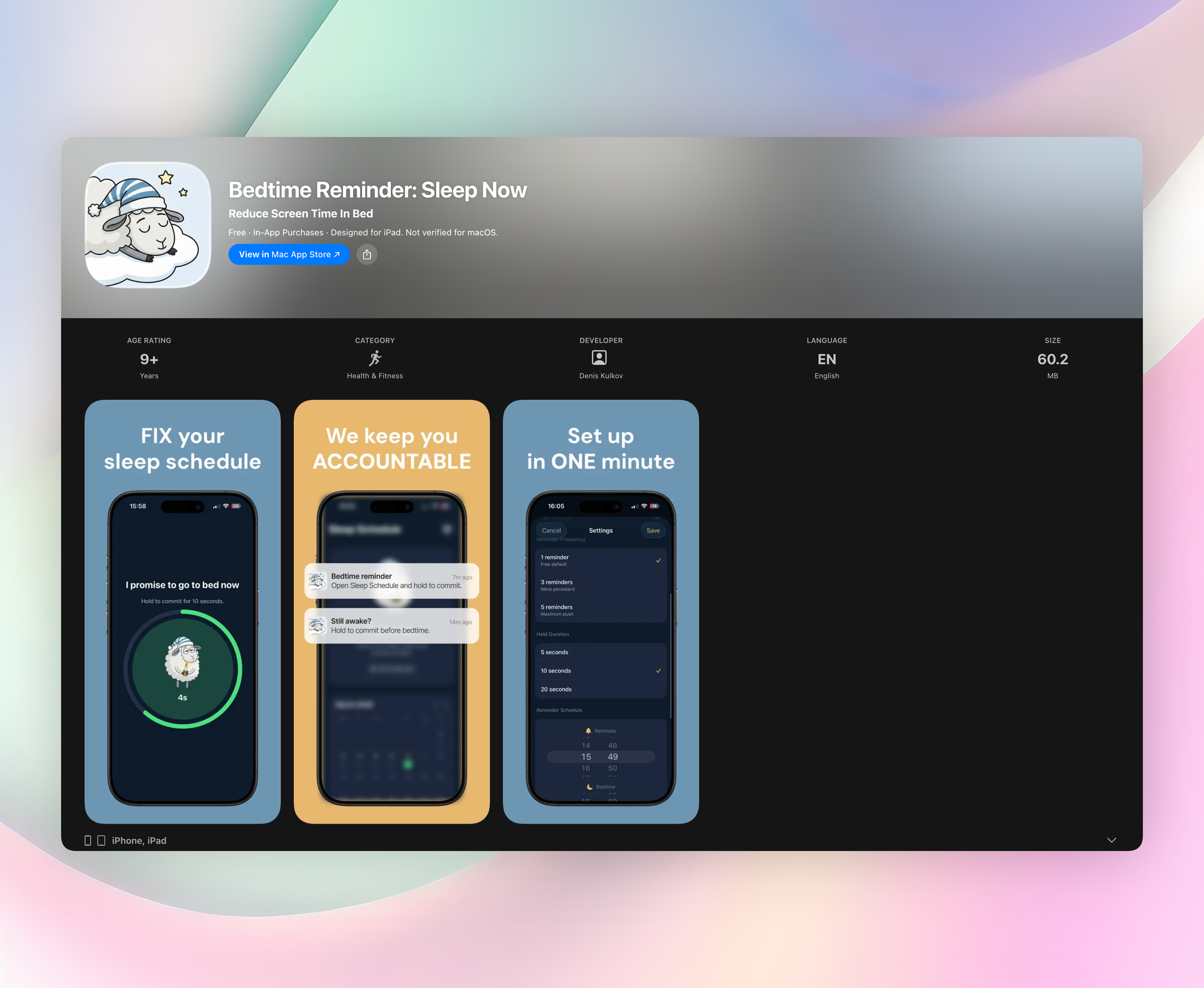
None of it is difficult. The hard part is doing it at 10 p.m. instead of noticing at midnight — a scheduling problem more than a sleep problem. Bedtime Reminder, a bedtime reminder app for iPhone, is one way to attach the routine to a cue — the alert becomes the trigger to run the room setup while you still have an hour of buffer.
FAQ
Is 72 degrees too warm for sleeping?
For most adults it sits above the useful range and leaves little room for core temperature to fall. If 72°F is as low as you can get, compensate with bedding: a thin sheet, breathable fabric, a fan aimed at the bed. Sleeping hot under a heavy duvet at 72°F is a bedding problem, not a thermostat problem.
What temperature is too cold to sleep in?
Once a room reaches the mid-50s°F (around 12–13°C), typical bedding stops keeping up and sleep fragments. The number moves with what you sleep under, so judge by symptoms: cold feet, curling up, waking to pull the covers tighter.
Do blackout curtains really help with sleep?
They help most against a real light problem: early summer dawns, a streetlight at the window, daytime sleep after a night shift. In an already-dark room the gain is marginal, and installation decides whether they work at all — light leaking around an undersized panel undoes the benefit.
Is it bad to sleep with a light on?
Light reaches your retina through closed eyelids, so a lit room tends to keep sleep lighter than full darkness. If you need something on for safety, use the dimmest warm-toned source you can and place it low, away from the head of the bed.
Free Bedtime Reminder tools
- Best Nap Length CalculatorPlan the best nap length for your available window. Get a suggested nap start, alarm time and a warning if the window is too short.
- Calories Burned Sleeping CalculatorEstimate calories burned during sleep, calories per hour and the share of a full day's resting burn. Add age, sex and height for a BMR comparison.
- Melatonin Timing PlannerWondering how much melatonin should I take? Choose a target bedtime and reason to see the clock window used in studies and their published dose range, presented as reference rather than advice.
- Night Shift Sleep Schedule PlannerPlan a repeatable sleep, nap and wake schedule around night shifts. The planner keeps your requested total sleep duration while showing the timing it used.
- REM Sleep CalculatorEstimate where REM-heavy late-night sleep may fit in your schedule. Enter time asleep, sleep onset and wake-up time for a range, not a precise measurement.
- Sleep Cycle CalculatorUse this sleep calculator to plan bedtimes or wake-up times around 4, 5 or 6 sleep cycles. Add the minutes you usually need to fall asleep.
- Sleep Debt CalculatorCompare your usual sleep need with actual sleep from recent nights. See total sleep debt or surplus, a nightly breakdown and an optional gradual recovery target.
- Sleep Efficiency CalculatorEnter time in bed and estimated time asleep to calculate sleep efficiency as a percentage and see the awake-time gap.
- Sleep Needs CalculatorFind how many hours of sleep you need by age, see the recommended nightly range, and work back to a bedtime from your wake-up time.
- Sleep TimerSet a sleep timer for 15 to 90 minutes or choose a custom duration. The low-glare countdown stays in your browser and can end with a gentle chime.
- White Noise GeneratorGenerate continuous white, pink or brown noise in your browser. Play it while you sleep, adjust the volume and optionally set a timer with a gentle fade-out.